

Introduction
Hungary is at a crossroads as it gets ready for parliamentary elections on April 12, 2026. Viktor Orbán, Hungary’s long-serving prime minister, is at the center of this political moment. His time in office has changed politics in Hungary and made waves across Europe. Orbán has gotten a lot of attention from both supporters and critics in the run-up to this election. The changing nature of Hungary’s political scene has turned what could have been a normal national vote into a bigger European and worldwide event.
Orbán has been prime minister since 2010. He has strengthened his hold on power by using a combination of political strategy, nationalistic language, and changes to institutions that have changed the balance of Hungary’s democratic structures and its relationship with the European Union. Critics say that Hungary has become less democratic, its checks and balances have weakened, and there have been more claims of institutional capture under his leadership. Supporters say that his leadership protects national sovereignty and traditional values.
This election is different from others because Orbán has been in power for a long time and because far-right European politicians have come together to support him in public, even if internal polling shows that his grip on power may be slipping. This contrast between his problems at home and support from outside groups is a good time to look at Orbán’s legacy and the larger ideological movements he has helped form.
The Gathering Of Far-Right Leaders: Support From All Over Europe
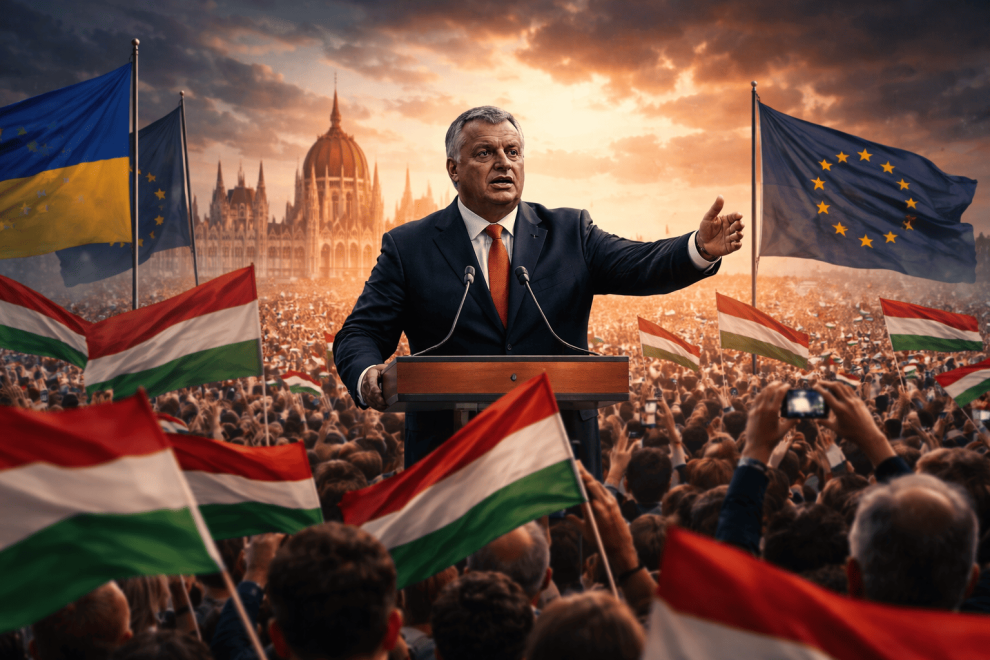
One of the most interesting things to happen in Hungary’s election campaign is the gathering of well-known far-right European leaders to support Orbán. In March 2026, a big event in Budapest brought together nationalist and conservative leaders from all over Europe to celebrate Orbán’s leadership and call for people to work together.
Marine Le Pen of France’s National Rally, Geert Wilders of the Netherlands’ Freedom Party, and Matteo Salvini of Italy were among the people who praised Orbán for standing up to Brussels and being what they see as a bulwark against what they see as the EU’s overreach. These endorsements show that Hungary’s ruling party is getting closer to a larger far-right network that wants to have more power in European politics.
The leaders that got together praised Orbán for standing up for Hungary’s cultural identity, national sovereignty, and fighting EU measures that they say hurt national autonomy. Former U.S. President Donald Trump also backed Orbán with a video message applauding his leadership. This is a rare case of a U.S. Republican getting involved in a foreign election campaign.
Supporters have used this convergence as a rallying point to fight back against what they see as the EU’s excessive centralization of power and challenges to traditional values. Orbán’s idea of “illiberal democracy,” which combines national conservatism with distrust of supranational authority, is a method for his supporters to change the way Europe is run in the future.
But these alliances are also very controversial. A lot of mainstream European officials have spoken out against these kinds of rallies, saying they go against democratic principles, make the EU less united, and give extremists more power. Some people who don’t like these links say they could make politics more divided and make existing democratic procedures less stable in all EU member states.
Orbán’s Problems At Home And How The Election Works?
Even though he has a lot of famous people backing him, Orbán’s position at home is not as strong as it was in past elections. Orbán’s Fidesz party has been in charge of Hungarian politics for much of his 16 years in office. They routinely get supermajorities and change the laws of elections to their advantage. But recent surveys show that this could be one of the most competitive races he has ever run in.
Péter Magyar, the head of the new Tisza party, is at the top of national polls. He has won support by presenting himself as a genuine alternative to Orbán’s government. Magyar’s ascent shows that more and more Hungarian voters are unhappy with the economy not getting better, public services getting worse, and worries about corruption and bad government.
There are a lot of problems with Orbán’s government that have caused this unhappiness. A financial investigation in the Financial Times found that a tiny group of business people who are very close to Orbán’s Fidesz party had secured billions of dollars in public contracts throughout his time in office. Critics call this crony capitalism and state takeover. These new facts have become major talking points for the opposition, bringing up problems of fairness and openness.
Another big source of disagreement comes from claims that Hungary’s foreign minister communicated secret EU diplomatic information with Russian officials during council meetings. The opposition has labeled this possible breach a kind of treason that hurts the interests of Hungary and the EU. Orbán ordered an internal probe in response, but he kept his long-standing connections with Russia.
Hungarians, especially younger and urban voters who want a break from four terms under Orbán’s leadership, are telling stories of change because of the mix of economic problems, charges of corruption, and geopolitical scrutiny.
The Illiberal Democracy Model And Control Of Institutions
To comprehend Orbán’s long-term political strategy, one must look beyond the current election campaign and analyze the ideology frequently linked to his governance, commonly termed “illiberal democracy.” This concept suggests a government that puts traditional values, national sovereignty, and strong executive power ahead of liberal democratic principles like media freedom and judicial independence.
Critics say that Hungary has made important changes to its constitution and government under Orbán, which have made it harder for independent checks on power to work. Both Freedom House and Transparency International have reported drops in Hungary’s democratic metrics, such as press freedom, judicial independence, and the fight against corruption. These events have sparked discussion regarding the state of democracy in the EU and Hungary’s adherence to common European legal standards.
Supporters of Orbán, on the other hand, say that these changes are vital to bring the country back together culturally and protect Hungary from what they see as detrimental outside influences. They say that strong leadership and quick policy action are necessary when things are going wrong. A lot of the talk is about maintaining Hungary’s Christian history, curbing immigration, and standing up for the country’s independence against EU rules that some people see as intrusive.
This way of thinking has affected Orbán’s style of governing, especially when it comes to how the media and the courts have been changed. Critics see these moves as ways for Fidesz to tighten its grip over public debate and silence dissenting voices. This makes it harder for political parties to compete in elections.
Hungary And The European Union
Orbán’s views on the European Union have been a big part of his foreign policy and a big part of this election cycle. In 2004, Hungary joined the EU with a lot of public support, but Orbán’s leadership has made Hungary more and more at odds with Brussels. He has vetoed EU measures many times in the past few years, most notably stopping a large loan worth billions of euros that was meant to help Ukraine rebuild and defend itself.
Orbán said that these kinds of vetoes are needed to preserve Hungary’s interests, especially when it comes to energy security and economic stability. But EU leaders are frustrated and worried that Hungary’s refusal to go along with group decisions makes the club less united and less able to deal with problems that affect all of its members.
This friction has more effects than merely on Hungary’s membership in the EU. It also affects how EU member states balance their own autonomy with their shared duties. Some critics say that Hungary’s stance shows a stronger Euroscepticism, which is being skeptical or critical of EU power structures and integration. This has grown more clear since Orbán took over as leader.
There is a lot of disagreement about whether Orbán’s leadership in Hungary will make the country less involved in EU processes. Some others think that even if Orbán loses the next election, the institutions he constructed while in power may still be in place, making it hard to make quick changes.
Effects On The World And On Ideas
Hungary’s election has important effects that go beyond its own borders. Orbán’s leadership and the ideological movement it stands for have changed the political landscape in Europe and parts of the United States. His ideas about nationalism, skepticism of supranational government, and focus on traditional social values have struck a chord with far-right parties and helped build alliances across borders.
The gathering of far-right leaders across Europe in Budapest was an attempt to strengthen these ties and make Hungary a center for ideological collaboration. This alignment has made some wonder about the future of European integration, how strong democratic standards are, and whether the continent would become even more divided.
At the same time, the fact that foreign politicians are involved in Hungary’s election campaign has sparked questions about sovereignty, outside influence, and the right limits of international political involvement. Critics say that this kind of activity could mess up democratic processes, while supporters say it is a valid way to show support and shared beliefs.
Conclusion
As April 12, 2026, polling day gets closer, the results in Hungary will have big effects on both how the country is run and on political trends across Europe. For Orbán, staying in power would mean that his model is still legitimate, which would make nationalist and illiberal movements in Europe even more important. If he loses, it could change the course of Hungary’s politics for the better and hurt far-right groups that support him.
The opposition’s momentum, shown by Péter Magyar’s rise and criticism of corruption and administration, shows that more and more Hungarians want a new political system. We don’t know yet how this momentum will affect the elections, but it shows how volatile Hungary’s political atmosphere is and how complicated the relationship is between domestic forces and overseas alliances.
On a larger scale, this election shows the problems that modern European democracies face: finding a balance between national sovereignty and working together, dealing with ideological differences, and finding common ground on how to govern in a world that is becoming more connected. Hungary’s choice will have effects outside of its own boundaries. It will shed light on the future of European union, the strength of democratic institutions, and the role of ideology in modern government.