
Egg Prices Surge Across Europe Ahead Of Easter 2026: A Comprehensive Analysis
Introduction
As Easter 2026 approaches, Europe is experiencing a notable surge in egg prices, a staple food item that holds both cultural and economic significance across the region. Eggs are widely consumed in households and are also central to traditional Easter celebrations, baking, and confectionery production. This seasonal demand typically leads to some level of price fluctuation, but the current increase has drawn attention due to its scale and persistence compared to general inflation trends.
Across the European Union and neighboring countries, egg prices have risen at a pace significantly higher than overall inflation. While general inflation remains relatively moderate, egg prices have climbed sharply, reflecting a combination of supply constraints, rising production costs, and increased demand. This divergence highlights the unique pressures affecting the egg market and signals broader challenges within the food supply chain.
Overview Of Rising Egg Prices Across Europe
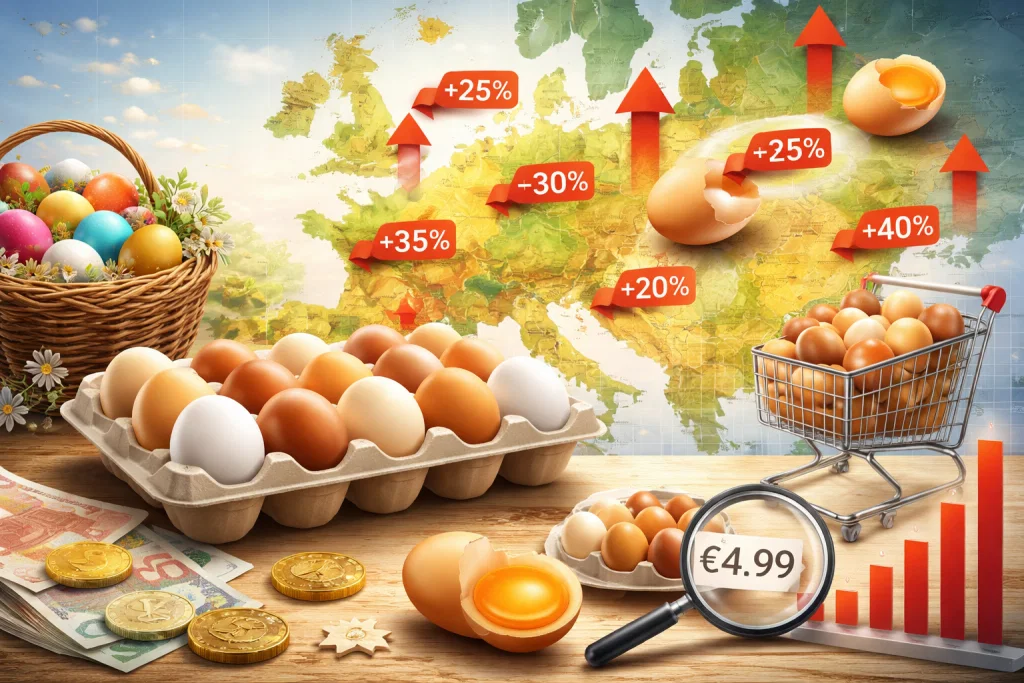
Recent data indicates that egg prices across Europe have increased at a rate far exceeding average inflation levels. While overall inflation has remained in the low single digits in many European countries, egg prices have risen at multiples of that rate in several markets. This discrepancy has led economists and analysts to refer to the phenomenon as “eggflation,” emphasizing the disproportionate rise in this specific commodity.
The increase is not uniform across the continent. Some countries have experienced relatively moderate increases, while others have seen dramatic spikes in egg prices. This variation is influenced by local production capacity, dependence on imports, cost structures, and regional market dynamics. Despite these differences, the overall trend points to a continent-wide upward pressure on egg prices ahead of the Easter period.
Countries Experiencing The Highest Increases
Certain European countries have been more heavily impacted by rising egg prices than others. Spain, for example, has seen one of the steepest increases, with egg prices rising at a rate significantly above the national inflation average. This indicates that the egg market in Spain is experiencing specific pressures beyond general economic conditions.
Other countries such as North Macedonia and Portugal have also reported substantial increases in egg prices. In these markets, the rise has been notable enough to affect consumer purchasing behavior and draw attention from policymakers and industry stakeholders. Additional countries, including Austria, Latvia, Slovakia, Albania, and Montenegro, have also experienced double-digit increases, though to varying degrees.
These differences across countries highlight how localized factors such as domestic supply chains, production costs, and import dependencies can influence pricing trends. Countries with stronger domestic production capacity may experience different pricing dynamics compared to those that rely more heavily on imports.
Key Drivers Behind The Price Surge
Rising Production Costs
One of the primary drivers behind increasing egg prices is the rising cost of production. Feed, which constitutes a major component of poultry farming expenses, has become more expensive due to fluctuations in global commodity markets. Grains and oilseeds, essential ingredients in poultry feed, have experienced price volatility due to factors such as weather conditions, global supply-demand imbalances, and geopolitical developments.
Energy costs also play a significant role in egg production. Farms require electricity for heating, ventilation, and lighting, while transportation and distribution depend heavily on fuel prices. Increases in energy costs therefore directly impact the overall cost structure of egg production, contributing to higher retail prices.
Supply Chain Disruptions
Supply chain disruptions have further contributed to rising egg prices. These disruptions may include transportation challenges, labor shortages, and logistical inefficiencies that affect the movement of eggs from farms to consumers. Any delays or bottlenecks in the supply chain can reduce the availability of eggs in retail markets, leading to upward pressure on prices.
In addition, periodic outbreaks of avian diseases have impacted poultry populations in various regions. When outbreaks occur, producers may be required to cull affected flocks or implement strict containment measures, temporarily reducing supply. Such events can create imbalances between supply and demand, further driving price increases.
Seasonal Demand Around Easter
Seasonality plays a crucial role in egg price dynamics, particularly in Europe. Easter is one of the most important periods for egg consumption, both in terms of direct consumption and indirect use in food production. Demand typically increases in the weeks leading up to the holiday as consumers purchase eggs for cooking, baking, and traditional celebrations.
When this seasonal surge in demand coincides with already constrained supply or elevated production costs, it amplifies price increases. Retailers and suppliers may adjust prices in anticipation of higher demand, contributing to the observed spike during this period.
Broader Economic Conditions
The broader economic environment also influences food prices, including eggs. General inflation affects wages, transportation costs, and other inputs in the production and distribution process. Although egg price inflation has exceeded overall inflation, the general upward trend in prices across the economy creates a baseline that supports higher food costs.
Macroeconomic factors such as energy market volatility, changes in trade flows, and shifts in consumer spending patterns also play a role. When consumers face higher costs in other areas of their budgets, demand patterns for food items may shift, but staple products like eggs tend to remain in demand, maintaining upward pressure on prices.
Impact On Consumers
The rise in egg prices has a direct impact on consumers across Europe. Eggs are considered an affordable and versatile source of protein, making them a staple in many households. As prices increase, consumers may experience higher grocery bills, particularly during a period when other food categories are also affected by inflation.
Lower-income households are often the most affected by rising food prices, as they allocate a larger proportion of their income to essential goods. For these households, increases in staple food items like eggs can significantly affect purchasing power and overall quality of life.
In response to higher prices, consumers may adjust their behavior by reducing consumption, switching to alternative protein sources, or seeking lower-cost brands and retailers. These behavioral changes can influence overall market demand and potentially impact pricing dynamics over time.
Impact On Producers And Retailers
Producers of eggs face a complex situation in a high-cost environment. While higher retail prices can increase revenue, they are often offset by rising input costs such as feed, energy, labor, and transportation. This means that profit margins may not necessarily improve despite higher selling prices.
Smaller producers may face greater challenges compared to larger operations due to limited economies of scale. They may have less flexibility to absorb cost increases or negotiate favorable terms for inputs, making them more vulnerable to market fluctuations.
Retailers also play a key role in the supply chain. They must balance maintaining competitive pricing with covering increased procurement costs. In highly competitive markets, retailers may have limited ability to pass on all cost increases to consumers, which can further compress margins.
Comparison With Other Food Categories
The surge in egg prices is part of a broader trend of rising food costs across Europe. Other food categories, including meat and dairy products, have also experienced price increases due to similar factors such as feed costs, energy prices, and supply chain disruptions.
Chocolate and confectionery products, which are closely associated with Easter, have also seen price increases driven by global commodity market pressures, particularly in cocoa production. These parallel trends suggest that multiple components of the Easter basket are becoming more expensive, amplifying the overall economic impact on consumers during the holiday season.
Outlook For Egg Prices In Europe
Looking ahead, the trajectory of egg prices will depend on several factors, including the stabilization of feed and energy costs, improvements in supply chain efficiency, and recovery in poultry production levels. If these conditions improve, price pressures may ease over time.
However, uncertainties remain, particularly in relation to global commodity markets and potential disruptions caused by geopolitical events or climate-related factors. Seasonal demand will continue to play a role, especially during peak periods such as Easter, when consumption typically increases.
Policymakers and industry stakeholders may continue to monitor the situation closely, as sustained increases in food prices can have broader economic and social implications. Efforts to improve supply chain resilience, support agricultural producers, and manage inflationary pressures will likely remain important in the coming months.
Conclusion
The surge in egg prices across Europe ahead of Easter 2026 reflects a complex interplay of economic, structural, and seasonal factors. Rising production costs, supply chain challenges, and increased demand have all contributed to significant price increases that exceed general inflation trends.
While the impact varies across countries, the overall pattern indicates a continent-wide phenomenon affecting consumers, producers, and retailers alike. As Europe approaches one of its key seasonal consumption periods, egg price inflation serves as a reminder of the sensitivity of food markets to both global and local influences, and the importance of understanding the factors that drive everyday essential goods.