
Bitcoin Price Analysis March 2026 War Tensions ETF Outflows And The Battle For The 70000 Level
Introduction
The global cryptocurrency market continues to experience significant volatility in 2026 as macroeconomic factors, geopolitical tensions and institutional investment flows shape the direction of digital assets. Bitcoin, the world’s largest cryptocurrency by market capitalization, is currently trading around the psychologically important seventy thousand dollar level. Recent market movements show that the cryptocurrency market is increasingly connected to global financial conditions including interest rates, geopolitical risks and institutional capital flows.
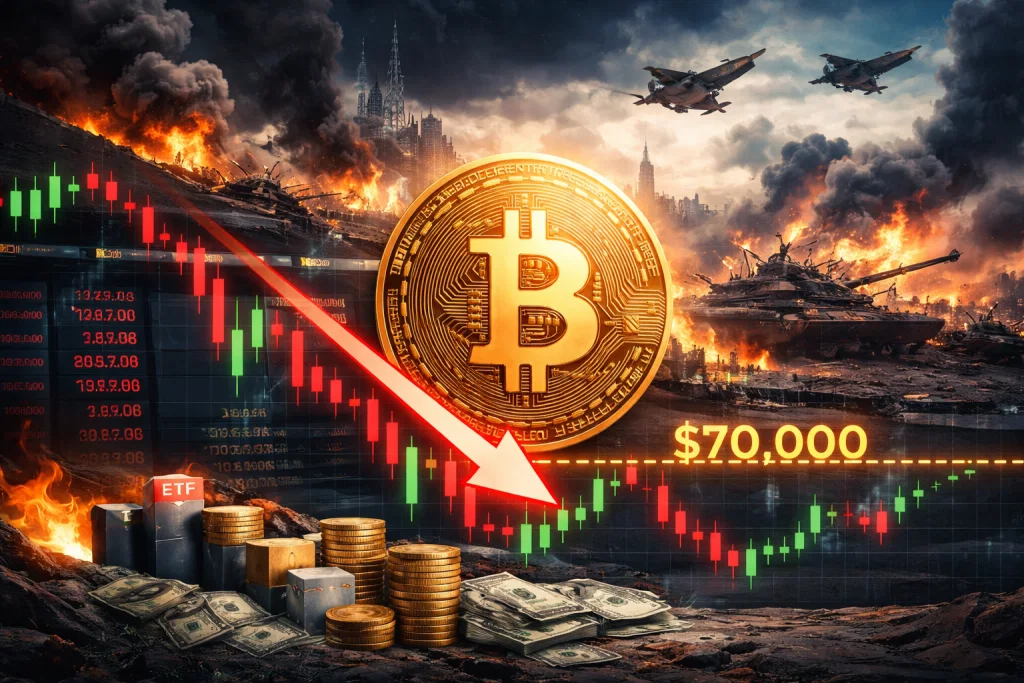
In early March 2026 Bitcoin faced renewed pressure as geopolitical tensions between major global powers and large withdrawals from Bitcoin exchange traded funds triggered uncertainty in the market. Analysts have noted that these developments pushed Bitcoin toward the critical seventy thousand dollar price level which many traders consider a key support and resistance zone.
Global Macroeconomic Pressure On Bitcoin
The cryptocurrency market no longer operates in isolation. Over the past several years Bitcoin has become deeply integrated with the global financial system. As a result macroeconomic conditions such as inflation, interest rates and geopolitical developments have a direct impact on digital asset prices.
In March 2026 investors are facing several major uncertainties including geopolitical tensions, rising energy prices and changing expectations for central bank policies. These factors have increased volatility across financial markets including stocks commodities and cryptocurrencies.
Geopolitical conflict in particular has created a wave of caution among global investors. Escalating tensions in certain regions have raised concerns about potential disruptions to global trade energy supplies and economic stability. When geopolitical risk increases investors often shift toward assets considered safer such as government bonds or gold.
Cryptocurrencies including Bitcoin are sometimes treated as risk assets during these periods. This means that when uncertainty rises investors may reduce exposure to digital assets and move capital into more traditional safe haven investments. As a result geopolitical developments can lead to sudden price swings in the cryptocurrency market.
The Role Of Bitcoin ETFs In Market Liquidity
One of the most important developments in the cryptocurrency industry over the past two years has been the introduction of spot Bitcoin exchange traded funds. These financial products allow investors to gain exposure to Bitcoin through traditional stock exchanges without directly purchasing the cryptocurrency.
The approval of Bitcoin ETFs marked a major milestone for the digital asset industry. It opened the door for institutional investors such as pension funds hedge funds and asset management firms to participate in the Bitcoin market more easily. This new channel of investment brought significant liquidity and helped drive several major price rallies.
However ETF activity can also create downward pressure when investors withdraw funds. When ETF holders sell their shares the underlying Bitcoin holdings may also be sold in the market. This can increase selling pressure and contribute to price declines.
Bitcoin Price Action Near The Seventy Thousand Level
The seventy thousand dollar price level has become a major psychological battleground for Bitcoin traders. Psychological price levels are important because many investors place buy or sell orders around round numbers. This concentration of orders can create strong support or resistance zones.
In recent trading sessions Bitcoin has moved within a wide range fluctuating between the mid sixty thousand region and slightly above seventy thousand dollars. These fluctuations reflect the uncertainty currently present in the market as traders respond to economic news geopolitical developments and investment fund flows.
Technical indicators suggest that Bitcoin’s momentum has weakened slightly in the short term but the broader trend remains active. The market is currently in a consolidation phase where prices move sideways while investors evaluate new information.
Institutional Investors And Market Sentiment
Institutional participation has transformed the cryptocurrency market over the past decade. Large investment firms hedge funds and financial institutions now play a significant role in determining price movements. In earlier years the Bitcoin market was dominated primarily by retail investors technology enthusiasts and early cryptocurrency adopters. Today institutional capital represents a growing share of the market.
Institutional investors often approach cryptocurrency investment differently from retail traders. They typically rely on long term strategies risk management frameworks and diversified portfolios. Their investment decisions may also be influenced by broader macroeconomic conditions and regulatory developments.
When institutions increase their exposure to Bitcoin the market often experiences strong upward momentum. Conversely when institutional investors reduce their holdings prices may decline. This dynamic highlights the growing influence of professional investment firms in the cryptocurrency ecosystem.
The Influence Of Geopolitical Events
Geopolitical developments have always influenced global financial markets but their impact on cryptocurrency markets has become more noticeable in recent years. As Bitcoin becomes more integrated into global finance it increasingly reacts to major political and economic events.
In the current market environment tensions in several regions have contributed to increased volatility. Political conflicts military developments and economic sanctions can all affect investor sentiment and financial market stability.
When geopolitical tensions escalate investors often move capital toward assets perceived as safe stores of value. Traditionally gold has played this role while government bonds also attract investment during uncertain periods.
Bitcoin’s status as a safe haven asset remains a subject of debate among analysts. Some believe that its decentralized nature and limited supply make it an attractive hedge against economic instability. Others argue that Bitcoin behaves more like a high growth technology asset and may decline during periods of market stress.
Market Volatility And Investor Psychology
Volatility is one of the defining characteristics of cryptocurrency markets. Compared with traditional financial assets cryptocurrencies often experience larger and more frequent price swings.
This volatility is partly due to the relatively smaller size of the cryptocurrency market compared with global equity or bond markets. Even moderate changes in capital flows can have a significant impact on prices.
Investor psychology also plays an important role. Cryptocurrency markets are heavily influenced by sentiment news headlines and social media discussions. Positive news about technological developments institutional adoption or regulatory progress can quickly drive bullish momentum.
On the other hand negative headlines about security issues regulatory restrictions or macroeconomic instability can trigger rapid sell offs. The speed at which information spreads through digital platforms often amplifies these reactions.
Because of this volatility many experienced investors emphasize the importance of risk management. Diversification careful position sizing and long term investment strategies are often recommended to navigate the unpredictable nature of cryptocurrency markets.
Future Outlook For Bitcoin
The long term outlook for Bitcoin remains a topic of intense discussion among investors analysts and economists. While short term price movements can be unpredictable several key trends are shaping the future of the cryptocurrency market.
Institutional adoption continues to grow as more financial firms introduce digital asset investment products and services. Regulatory frameworks are gradually becoming clearer in many jurisdictions which could encourage additional investment.
Technological developments within the broader blockchain ecosystem may also strengthen Bitcoin’s position in the digital economy. Innovations in security scalability and financial applications could expand the use cases for cryptocurrencies and increase global adoption.
At the same time macroeconomic conditions will continue to influence market behavior. Interest rate decisions, inflation trends and global economic growth will all affect investor appetite for digital assets.
If economic conditions improve and institutional investment flows return Bitcoin could potentially regain strong upward momentum. However periods of volatility and consolidation are likely to remain part of the market cycle.
Conclusion
Bitcoin’s recent struggle around the seventy thousand dollar level reflects the complex interaction of economic, political and financial forces shaping modern markets. Geopolitical tensions, institutional investment flows and monetary policy expectations have all contributed to recent price fluctuations.
Despite short term uncertainty Bitcoin continues to occupy a central role in the global digital asset ecosystem. Its decentralized design, limited supply and growing institutional adoption make it one of the most influential financial innovations of the modern era. For investors the current market environment requires careful analysis and disciplined risk management. Understanding the relationship between macroeconomic trends, institutional behavior and market psychology can provide valuable insights into Bitcoin’s evolving price dynamics.